Achieving true financial independence is not about reaching an arbitrary milestone or guessing when social security kicks in. It is the predictable mathematical intersection where the annual passive yield from your investment portfolio permanently exceeds your baseline cost of living.
Whether you plan to retire at 65 or pursue early retirement through the FIRE (Financial Independence, Retire Early) movement, calculating your exact retirement nest egg requires understanding Safe Withdrawal Rates (SWR), inflation indexing, tax asset location, and Sequence of Returns Risk (SRR).
1. What Exactly Is a Retirement Nest Egg?
A retirement nest egg represents the total accumulated balance of your income-generating assets intended to sustain your lifestyle after you cease active labor. Unlike illiquid assets (such as your primary residence), your investable nest egg consists of:
- Tax-Advantaged Accounts: Traditional 401(k), 403(b), Traditional IRA, SEP IRA, and Solo 401(k).
- Tax-Free Accounts: Roth IRA, Roth 401(k), and Health Savings Accounts (HSA).
- Taxable Brokerage Accounts: Low-cost index fund ETFs, dividend equities, and municipal bonds.
- Cash Equivalents & Money Markets: 1–2 years of living expenses held in high-yield savings (HYSA) or Treasury bills.
2. The 4% Rule & The 25x Multiplier Explained
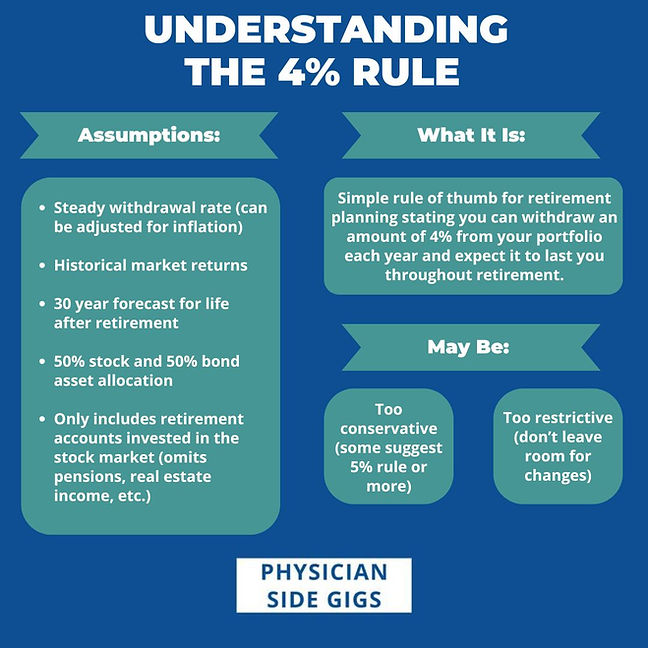
The foundation of modern retirement math originates from the landmark 1998 Trinity Study by professors Philip L. Cooley, Louis M. Carlsen, and Charles M. Hubbard. The study back-tested thousands of historical 30-year market periods (1926–1995) to determine the highest annual withdrawal rate a portfolio could sustain without running out of money.
The conclusion established the widely recognized 4% Safe Withdrawal Rate (SWR) for a traditional 30-year retirement:
The 25x Mathematical Multiplier:
Target Nest Egg = Annual Retirement Expenses × 25
Example: If your target annual expenditure in retirement is $60,000, your baseline nest egg is: $60,000 × 25 = $1,500,000.
Adapting the Multiplier for Early Retirement (FIRE)
While a 4% withdrawal rate boasts a 95%+ success rate over a standard 30-year horizon, longer retirement timelines (40 to 50+ years) introduce compounding longevity risk. Wealth researchers recommend the following safe withdrawal brackets:
- Traditional Retirement (30 Years / Age 65+): 4.0% SWR (25x annual expenses).
- Extended Retirement (40 Years / Age 55): 3.5% SWR (28.5x annual expenses).
- Early Financial Independence (50+ Years / Age 30–45): 3.25% to 3.3% SWR (30x to 33x annual expenses).
3. Calculating Your Real Annual Retirement Budget
Most individuals overestimate or underestimate their retirement needs by assuming their expenses will be an arbitrary 80% of their pre-retirement salary. A far more accurate methodology is the Cash-Flow Bucket Audit:
- Deduct Disappearing Work Expenses: FICA payroll taxes (7.65%), daily commuting costs, professional wardrobe, and ongoing retirement savings contributions (which you no longer make).
- Account for Mortgage Freedom: If your primary mortgage will be paid off prior to retirement, subtract principal and interest payments from baseline needs.
- Add Rising Healthcare & Insurance: Medicare Part B/D premiums, supplemental Medigap policies, and long-term care insurance (averaging $6,000–$12,000/year per couple).
- Lifestyle & Travel Surpluses: Active “Go-Go” years (ages 60–75) often see higher discretionary travel and hobby spending, followed by “Slow-Go” (75–85) and “No-Go” (85+) phases.
4. Navigating Sequence of Returns Risk (SRR)
Sequence of Returns Risk is the risk that the market experiences a severe bear market during the first 3 to 5 years of your retirement. When you sell equities during a downturn to fund living expenses, you permanently lock in capital losses and deplete your share count, accelerating portfolio exhaustion.
“The sequence in which investment returns occur matters just as much as the average rate of return over time. Selling equities at depressed valuations in early retirement is the primary catalyst of portfolio failure.”
The Cash Cushion Strategy
To insulate your portfolio from Sequence Risk, implement a 3-Tier Asset Allocation:
- Tier 1 (Cash Buffer – 1 to 2 Years): High-yield savings or Treasury bills to cover living expenses without liquidating stocks during market corrections.
- Tier 2 (Defensive Capital – 3 to 5 Years): Short-term bond index funds and TIPS (Treasury Inflation-Protected Securities).
- Tier 3 (Growth Engine – 6+ Years): Diversified broad-market equities (Vanguard Total Stock Market VTI / S&P 500 VOO and International VXUS).
5. Nest Egg Matrix: Required Savings by Annual Spending
The table below summarizes the exact capital required across different annual lifestyle budgets and withdrawal rates:
| Desired Annual Income | 4.0% SWR (25x) | 3.5% SWR (28.5x) | 3.25% SWR (30.7x) | Safe Monthly Budget |
|---|---|---|---|---|
| $40,000 / year | $1,000,000 | $1,142,857 | $1,230,769 | $3,333 / mo |
| $60,000 / year | $1,500,000 | $1,714,285 | $1,846,153 | $5,000 / mo |
| $80,000 / year | $2,000,000 | $2,285,714 | $2,461,538 | $6,666 / mo |
| $100,000 / year | $2,500,000 | $2,857,142 | $3,076,923 | $8,333 / mo |
| $120,000 / year | $3,000,000 | $3,428,571 | $3,692,307 | $10,000 / mo |
| $150,000 / year | $3,750,000 | $4,285,714 | $4,615,384 | $12,500 / mo |
6. Dynamic Withdrawal Strategies (Guyton-Klinger Rules)
Rather than adhering to rigid fixed annual inflation increases, savvy retirees utilize dynamic guardrails developed by financial planner Jonathan Guyton and William Klinger:
- Capital Preservation Rule: If the current withdrawal rate exceeds the initial SWR by more than 20% (due to a market drop), reduce the withdrawal amount by 10%.
- Prosperity Rule: If the portfolio surges and the current withdrawal rate falls 20% below the initial target, increase annual spending by 10% to enjoy surplus gains.
- Inflation Freeze: Forego annual inflation adjustments following years where the overall portfolio produced negative total returns.
7. Step-by-Step Action Plan to Reach Your Goal
Transforming your retirement calculation into reality requires executing disciplined savings and indexing steps:
- Max Out Tax-Advantaged Accounts: Utilize 401(k) employer matches first, then max out Roth IRA and HSA ($4,300 single / $8,550 family) for triple tax advantages.
- Automate Low-Cost ETF Contributions: Automate deposits into broad market index funds with expense ratios under 0.05%.
- Optimize Your Savings Rate: Increasing your savings rate from 15% to 35% cuts your working timeline by more than 12 years.
- Track Milestones Annually: Run simulations on our Retirement Calculator and Net Worth Calculator every 6 months to recalibrate your projections.